A real conversation
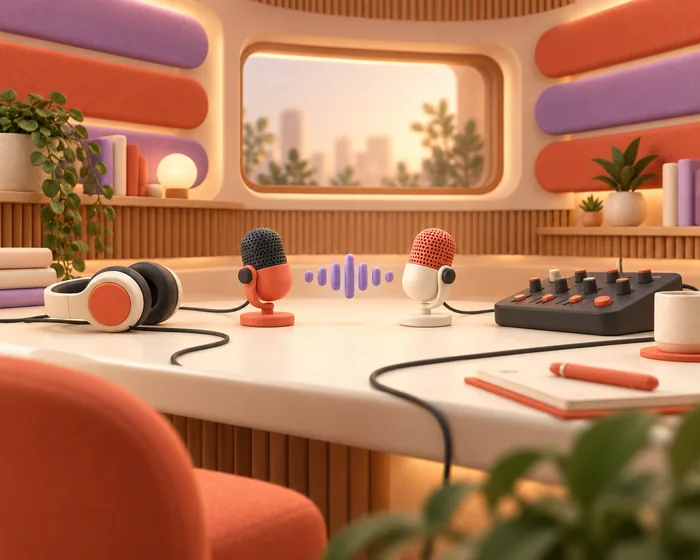
Each topic is explained as a natural dialogue between two voices rather than a read-out lecture.
Enter a topic and class level, and Madlen writes and narrates a two-person podcast to play in class.
The examples below were generated in Madlen.
Hello, dear Madlen listeners. I'm Albert. And I'm Claire. We are very happy today. We are going to talk about physics and the power of forces.
Physics is the study of how the world works. Today, we look at forces. A force is a simple push or a pull. It is very important because it changes how things move.
That is right. Does a force always move an object? No. Sometimes it does not move the object because the force is too small.
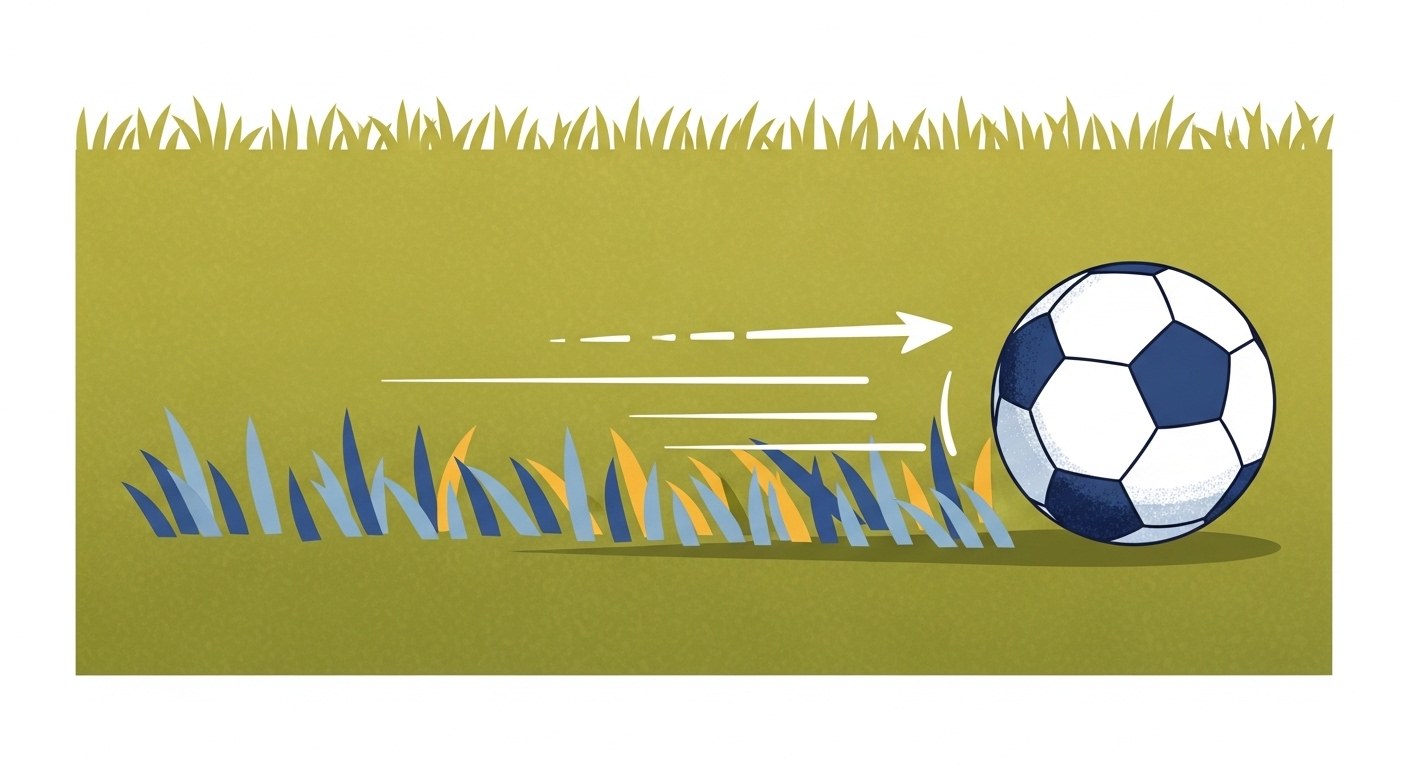
Yes, but forces can also change the direction of an object. Think about a ball. You kick the ball and it goes fast. You use a force to change its speed.
So we have different types of forces. Some forces touch objects. We call these contact forces. Friction is a common contact force. Friction is a force that slows things down when they rub together.
I have a question for you, Claire. Is friction a push? No. It is a force that acts against movement. It makes things stop.
Exactly. Now let's talk about forces that do not touch. Gravity is a famous example. Gravity is a force that pulls all objects toward the center of the Earth.
Does gravity push us up? No. It only pulls us down. This is why things fall when we drop them. It is a non-contact force because it works from a distance.
We must also understand balanced forces. These are forces that are equal in size but opposite in direction. When forces are balanced, the object does not change its motion.
So if I push a wall and the wall does not move, are the forces balanced? Yes, they are. My push is equal to the wall's pushback.
But what happens when one force is bigger? We call these unbalanced forces. These forces cause an object to start moving, stop moving, or change direction. That is clear.
We measure these forces, too. We use a unit called a Newton. We name it after Isaac Newton. One Newton is a small amount of force.
Is 10 Newtons more force than 5 Newtons? Yes, it is. More Newtons means a stronger push or a stronger pull.
Now, let's look at mass. Mass is the amount of matter in an object. A heavy object has more mass. It needs a bigger force to move it.
I see. So a big truck needs more force than a small bicycle because the truck has a lot of mass. That makes sense.
Let's answer some listener questions. One listener asks, do objects stop because they are tired? No, they stop because of a force like friction or gravity.
Here is another question. Can a force be invisible? Yes, it can. Gravity and magnetism are forces you cannot see, but they are very real.
And finally, does force affect every object? Yes, forces are everywhere in the universe. Everything is pushing or pulling on something else.
Today we learned many things. A force is a push or a pull. Friction slows things down and gravity pulls things down. Balanced forces mean no change in motion. We use Newtons to measure how strong a force is.
It was a great episode. Thank you for listening to us today on The Madlen Show. Yes, thank you. Be sure to join us next time for more fun on The Madlen Show. Goodbye.
Each topic is explained as a natural dialogue between two voices rather than a read-out lecture.
Madlen writes the script for the level you choose, from Key Stage 3 topics to GCSE revision.
Play the podcast in your lesson straight away, or download it and use it whenever you need it.
In Madlen a lesson podcast is ready in four steps. The options below come from the platform form itself.
Type a topic, choose a UK Curriculum learning outcome, upload files or paste a YouTube link. Word, PowerPoint, PDF, TXT and image files work, several at once.
Choose how long the podcast should be and which language it is in.
Preview and pick a voice for the host and for the guest, then set the speaking speed. The audio is generated at that speed from the start.
Add comprehension questions if you like. Listen and read the transcript, edit the podcast with AI and download it as an MP3 to play in class.
In Madlen’s Podcast Generator you only need to enter a topic and a class level. The AI writes an educational script and narrates it as a two-person conversation in minutes. You can then play it in class or download it.
An AI podcast generator turns lesson content into audio that pupils can listen to. Madlen’s Podcast Generator does this by writing a natural conversation between two voices about your topic and recording it for you. It is one of more than 50 tools in the Madlen Toolbox.
Madlen lets you choose the topic and class level yourself, so the Podcast Generator is not tied to one subject. You could make one for a Year 10 Biology topic such as DNA and heredity, or for a science topic such as forces and motion.
A podcast in Madlen is usually ready in a couple of minutes. The AI handles both the script and the narration, so all you do is enter the topic.
Madlen has a free plan for UK teachers, and it starts with 14 days of Pro. You can compare what each plan includes on the Madlen pricing page.
Every new account starts with 14 days of Pro, so you can try the tools on this page with your own classes.